JIGOKUDANI YAEN-KŌEN · THE PARK ITSELF
The Snow Monkey Park: ¥800 (≈$5.1), 1.6–2 km on foot, and about 160 wild macaques who owe you nothing
A single fenced valley at 850 m with one hot pool, one path in and no road to the gate. It is open every day (weather closures possible), it costs ¥800 (≈$5.1) for an adult, and since 2026-08-06 it sells a dated ticket, no time slots online. The one thing it will not promise is a monkey: the park says plainly that they may not show up at all on a given day.
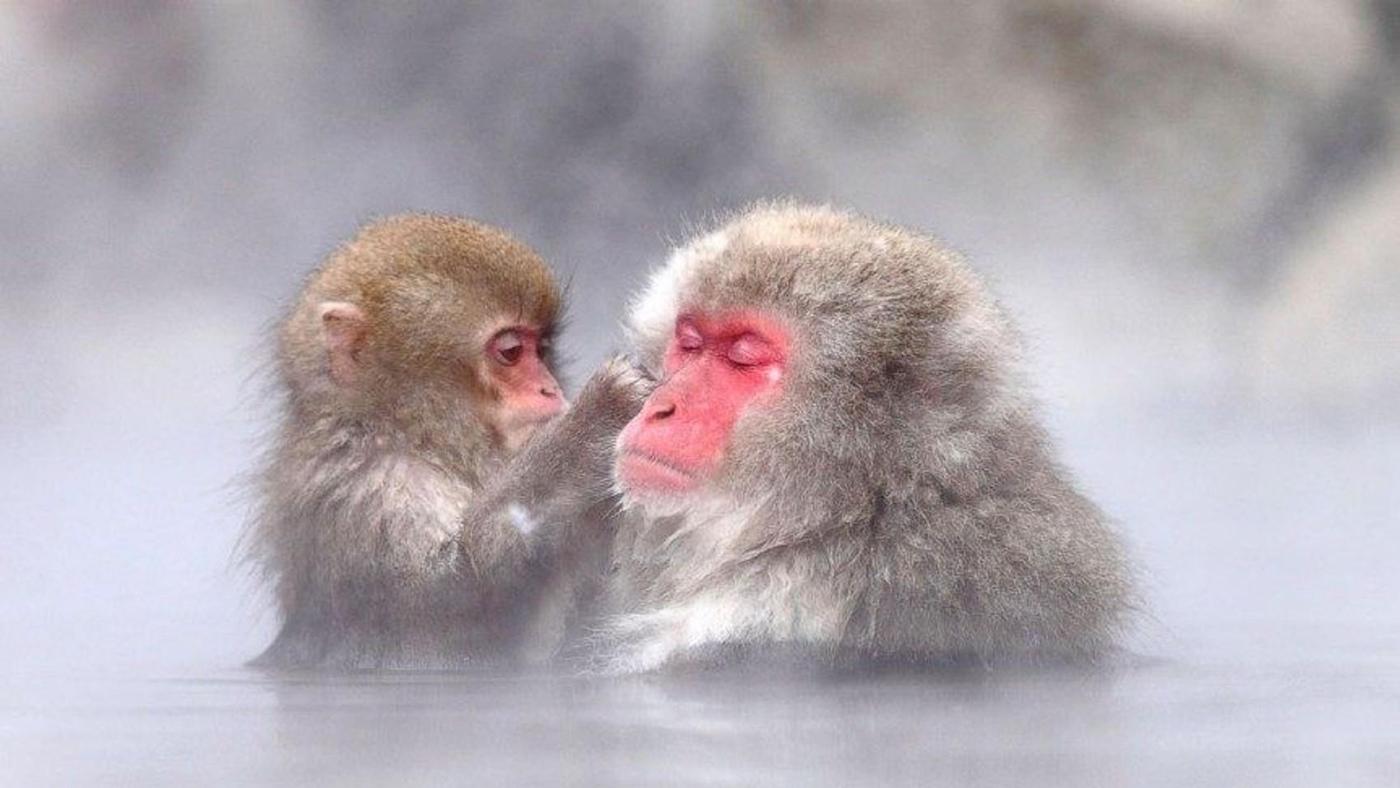
Park staff work to attract the monkeys during opening hours, but the monkeys may not show up at all on certain days; appearances are particularly sporadic in autumn. The park says it plainly, and so does every page on this site.
Converted at ¥156 = $1, the reference rate on 4 Sep 2026. Prices were read on 7 Sep 2026.
QUICK ANSWERS — THE PARK IN SIX LINES
- How much does the Snow Monkey Park cost?
- ¥800 (≈$5.1) for an adult, ¥400 (≈$2.6) for ages 6–17, free for 5 and under. The gate takes cash, credit cards, e-money; no QR-code payments.
- What are the opening hours?
- 8:30–17:00 from April–October and 9:00–16:00 from November–March. The park is open every day (weather closures possible), and the park asks visitors to arrive 30 minutes before closing time.
- Do you need to book a ticket in advance?
- Since 2026-08-06 the park sells a dated ticket, no time slots online, and reportedly around 2,000 visitors a day (media reports citing the park, June 2026); the park itself has not published the number The ticket window still operates — but on crowded days entry may be delayed or refused.
- Are the monkeys always there?
- No. Park staff work to attract the monkeys during opening hours, but the monkeys may not show up at all on certain days; appearances are particularly sporadic in autumn. They are wild, and about 160 of them live in the valley.
- Why do the monkeys bathe?
- For warmth: thermoregulation and lower stress hormones. The monkeys bathe to stave off the cold in winter; they do not use the baths at all hours of the day, nor throughout the year — which is why winter is the season everyone photographs.
- Can you touch or feed them?
- No, on both counts, and the park is blunt about why: do not touch the monkeys or shout at them, and do not make them nervous, and do not show or give the monkeys any food; feeding is strictly prohibited.
The park at a glance
Everything the park publishes about itself, in one block. The figures below are the ones every other page on this site quotes.
- ADDRESS
- 6845 Yamanouchi-machi, Shimotakai-gun, Nagano 381-0401
- PAYMENT AT THE GATE
- Cash, credit cards, e-money; no QR-code payments.
- LAST ARRIVAL
- The park asks visitors to arrive 30 minutes before closing time — in winter that means being on the trail well before 16:00.
- GETTING THERE
- Express bus from JR Nagano Station East Exit, bay 23, 41–60 minutes, ¥3,000 (≈$19); or the train to Yudanaka and a local bus. Either way the last 1.6–2 km are on foot. Every route, priced →
- PARKING
- Kanbayashi Onsen car park is free, year-round; the Jigokudani car park is ¥500 (≈$3.2), closed 1 Dec–31 Mar.
- IN WINTER
- The park records down to −10°C, over 1 m of snow. Dress for standing still outdoors, not for walking.
Every figure here is the park's own · the guided day that already contains the ¥800 (≈$5.1) and the bus →
The ticket, and what changed in 2026
One rule about this park changed in 2026, and most of the advice written before it is now wrong.
Until 2026-08-06 you simply turned up and paid ¥800 (≈$5.1) at the window. Since then the park has sold a dated ticket, no time slots online through webket, and reportedly around 2,000 visitors a day (media reports citing the park, June 2026); the park itself has not published the number The window has not closed — ticket window still operates; on crowded days entry may be delayed or refused — so the change is not that you must book, it is that on a busy winter day arriving without a ticket is now a risk it never used to be.
Online, dated to the day you are coming, from the park's own ticket platform. There are no time slots — the date is the whole booking. ¥800 (≈$5.1) adult, ¥400 (≈$2.6) for ages 6–17, free for 5 and under.
Ticket window still operates; on crowded days entry may be delayed or refused. In November–March, on a weekend, that is the sentence to plan around.
7 of the 21 tours on this site include the gate fee in their price, which settles the question in one purchase. The rest leave you to pay ¥800 (≈$5.1) on the day.
| TOUR WITH THE ¥800 (≈$5.1) TICKET INSIDE THE PRICE | LEAVES FROM | HOURS | FROMUSD · PER PERSON | PARK TICKET | Book |
|---|---|---|---|---|---|
| Snow Monkeys, Zenkoji Temple & Sake Day Trip4.9965 | Nagano | 8 - 12 hours | $140 (≈¥21,800)PER PERSON | INCLUDED — the ¥800 (≈$5.1) gate fee is inside this price | Book |
| Snow Monkey 1-Day Tour with Beef Sukiyaki Lunch4.6359 | Tokyo | 1 day | $151 (≈¥23,600)PER PERSON | INCLUDED — the ¥800 (≈$5.1) gate fee is inside this price | Book |
| 1-Day Snow Monkey & Cherry Blossom Tour in Spring4.864 | Nagano | 9 hours | $140 (≈¥21,800)PER PERSON | INCLUDED — the ¥800 (≈$5.1) gate fee is inside this price | Book |
| Snow Monkeys and Zenko-ji Day Trip & Sake4.916 | Nozawa | 10 hours | $140 (≈¥21,800)PER PERSON · MIN 2 | INCLUDED — the ¥800 (≈$5.1) gate fee is inside this price | Book |
| Ebisu-ko Fireworks & Snow Monkey Tour4.110 | Nagano | 10 hours | $217 (≈¥33,900)PER PERSON | INCLUDED — the ¥800 (≈$5.1) gate fee is inside this price | Book |
| Snow Monkey Park, Soba Lunch, and Shibu Onsen Tour4.99 | Nagano | 4 hours | $128 (≈¥20,000)PER PERSON · MIN 2 | INCLUDED — the ¥800 (≈$5.1) gate fee is inside this price | Book |
| Snow Monkey Park and Zenkoji Temple Tour4.85 | Myoko | 8 hours | $140 (≈¥21,800)PER PERSON | INCLUDED — the ¥800 (≈$5.1) gate fee is inside this price | Book |
LIVE DATES · $140 (≈¥21,800) · FROM NAGANO STATION · TICKET INCLUDED · 965 REVIEWS
The daily figure above is what media reported the park to be applying and the park itself has not published it, so treat it as a shape rather than a number · prices and ratings are a snapshot from 7 Sep 2026 · the ticket in detail, including how to buy it →
The 1.6–2 km walk in
No vehicle reaches the gate — not a taxi, not a tour bus, not a private car. The walk is the park's admission requirement, and it is the same for everybody.
What it is
Unpaved forest path with wooden steps near the entrance; no strollers, wheelchairs or suitcases. It follows the river up the valley from the Kanbayashi trailhead, gains height gently and ends at the ticket window.
How long it takes
25–40 minutes each way at an ordinary pace, so an hour of the day is walking before you have looked at anything.
In winter
Packed snow over ice, in shade, for most of its length. Boots with grip or crampons over your own shoes; this is the single most common thing visitors arrive unprepared for.
Renting the grip
Boots, crampons and jackets rented/sold at the shop by the trailhead (Oct–May). That comes from one first-party source, so bring what you need rather than counting on renting it.
Luggage
Small paid lockers at the trailhead shop; no large lockers — leave luggage at Nagano Station — reported by a single source. A suitcase does not go up this path either way.
Who it rules out
Strollers, wheelchairs and suitcases are excluded outright. A child carrier works. And no pets of any kind are admitted — guide dogs, hearing dogs and partner dogs included.

THIS IS THE PART NOBODY CAN SELL YOU OUT OF
A $140 (≈¥21,800) day trip and a $447 private car arrive at the same bus stop and walk the same 1.6–2 km. There is no version of this visit, at any price, where somebody else does the walking — and if a page ever tells you otherwise, that is the page to stop reading.
The troop, and why they get in the water
They are not exhibits and they are not tame. Everything the park asks of visitors follows from that one fact.
Japanese macaques, living free in the valley and free to leave it. The park feeds them to keep them coming — but park staff work to attract the monkeys during opening hours, but the monkeys may not show up at all on certain days; appearances are particularly sporadic in autumn.
For warmth: thermoregulation and lower stress hormones, and research has measured lower stress hormones in the ones that soak. The monkeys bathe to stave off the cold in winter; they do not use the baths at all hours of the day, nor throughout the year, so a warm afternoon in June is a different park from a January morning.
October–December is the mating season and April–June the birth season, with the peak in May. D ec–Mar most bathing.
The park publishes a predicted time for the monkeys coming down from the mountain and asks visitors to check before traveling and again on the day, through its live cameras and social accounts. On an autumn day that forecast is worth more than any advice on this page.
The honest version: the spring runs just as hot in August. What winter adds is a reason for the monkeys to be sitting in it.
Month by month, with the odds →What the park asks of you
The park publishes six. They are blunter than most park rules — the reason given for not staring is that a monkey reads it as hostility — and they are worth reading before you are standing next to one.
Do not feed them
Do not show or give the monkeys any food; feeding is strictly prohibited.
Do not touch or shout
Do not touch the monkeys or shout at them, and do not make them nervous.
Do not stare
Do not stare into a monkey's eyes; staring, and opening your mouth at them, reads as hostility.
Keep your distance
Keep space between you and them; if a curious young monkey comes close, step away.
No pets, at all
No pets of any kind, including guide dogs, hearing dogs and partner dogs.
Cameras
Flash is allowed; drones, selfie sticks and cameras placed in the bath are not, and a lens should not be pushed close to a monkey.
These are the park's own rules, in the park's own terms · the pet rule is unusually absolute and catches people out: assistance dogs are not exempt · flash photography is permitted, which surprises most visitors — it is drones, selfie sticks and a lens pushed into a monkey's face that are not · the underlying reason for all six is the same: about 160 wild animals that have to keep choosing to come down.
How a hot bath became a national park photograph
The park exists because the monkeys got into somebody else's bath first, in 1963, and it was easier to build them their own.
The bath that started it is not in the park and never was — it belongs to the ryokan a few minutes up the gorge · where to sleep, including inside the valley →
Visiting: on your own, or with the ticket carried for you
The park sells one thing: entry. Everything else about the visit is a transport decision, and it is the same decision whether you spend ¥5,100 (≈$33) or $151 (≈¥23,600).
No ticket, tour or vehicle shortens the walk, and none of them makes the monkeys come down.
LIVE DATES · $151 (≈¥23,600) · TOKYO AND BACK IN A DAY · TICKET AND LUNCH IN · 359 REVIEWS
All 21 tours compared, with the day you can do yourself as a row in the same table →
The park itself, in 10 questions
How much does it cost to enter the Snow Monkey Park?
¥800 (≈$5.1) for an adult and ¥400 (≈$2.6) for ages 6–17; 5 and under go free. The gate accepts cash, credit cards, e-money; no QR-code payments.
What time does the Snow Monkey Park open?
8:30–17:00 from April–October, and 9:00–16:00 from November–March. It is open every day (weather closures possible), and the park asks visitors to arrive 30 minutes before closing time.
Do I need to buy a ticket in advance?
Since 2026-08-06 the park has sold a dated ticket, no time slots online, and reportedly around 2,000 visitors a day (media reports citing the park, June 2026); the park itself has not published the number Ticket window still operates; on crowded days entry may be delayed or refused. In winter, buy ahead or take a tour that includes the entry; in the quiet months you can still walk up.
How long is the walk to the Snow Monkey Park?
1.6–2 km each way, 25–40 minutes, on an unpaved forest path with wooden steps near the entrance; no strollers, wheelchairs or suitcases. No vehicle reaches the gate, so the walk is unavoidable for every visitor in every season.
Are the snow monkeys dangerous?
They are wild animals, and the park's rules exist because of it: do not touch the monkeys or shout at them, and do not make them nervous, do not stare into a monkey's eyes; staring, and opening your mouth at them, reads as hostility, and keep space between you and them; if a curious young monkey comes close, step away. Follow those and the monkeys ignore you, which is the entire experience.
Can you touch or feed the snow monkeys?
No. Do not show or give the monkeys any food; feeding is strictly prohibited, and do not touch the monkeys or shout at them, and do not make them nervous. If a young monkey approaches you, step away.
Are the monkeys in the hot spring every day?
No. Park staff work to attract the monkeys during opening hours, but the monkeys may not show up at all on certain days; appearances are particularly sporadic in autumn, and the monkeys bathe to stave off the cold in winter; they do not use the baths at all hours of the day, nor throughout the year. The park publishes a same-day prediction of when they come down, alongside live cameras — check it the morning you go.
Why do the snow monkeys bathe in the hot spring?
For warmth — thermoregulation and lower stress hormones — and research has measured lower stress hormones in the monkeys that bathe. The habit began in 1963 when one young macaque climbed into a ryokan's outdoor bath in the gorge; the park opened in 1964 with a pool built for them.
Can I bring a stroller, a wheelchair or a dog?
None of the three. The trail is an unpaved forest path with wooden steps near the entrance, which rules out strollers, wheelchairs and suitcases, and the park admits no pets of any kind, including guide dogs, hearing dogs and partner dogs.
Is the Snow Monkey Park worth it?
If you accept what it is: about 160 wild monkeys in one small valley, reached by a 1.6–2 km walk, with no guarantee any of them will be in the water. In November–March the odds are good and the photograph is the one you have seen. In autumn they are poor, and the park says so itself.
Everything above is the park's own published position · the guided day from Nagano Station, with live dates and the ¥800 (≈$5.1) inside the price →
¥800 (≈$5.1) at the gate, 1.6–2 km on foot, and about 160 monkeys who decide for themselves
The park sells entry and nothing else. Whether the day works is a question of the month, the hour and the weather — and of whether you brought the right shoes.
OR HOW TO GET THERE · WHICH MONTH · WHERE TO STAY · ALL 21 TOURS